
Serene LIS
Serene LIS, the system this laboratory runs on
Every laboratory of this size runs on something: a spreadsheet, a template in Word, or software written for a hospital three times its size. We built ours, because the things that go wrong in a small lab are specific and none of the available answers addressed them.
Why it exists
It was built for this bench, by the people standing at it.
A laboratory information system is not glamorous software. It is the thing that makes sure the tube in your hand is the tube the analyser thinks it is, that the number on the report is the number the machine produced, and that the person who signed it can be named a year later. Most of what it does is refuse to let something quietly go wrong.
It runs the whole way through: registering a patient at the counter, pricing the bill, printing the barcode, receiving the tube at the bench, taking results from the analysers, holding what disagrees, signing the report and sending the link. One system, so nothing has to be retyped between two of them.
What it looks like
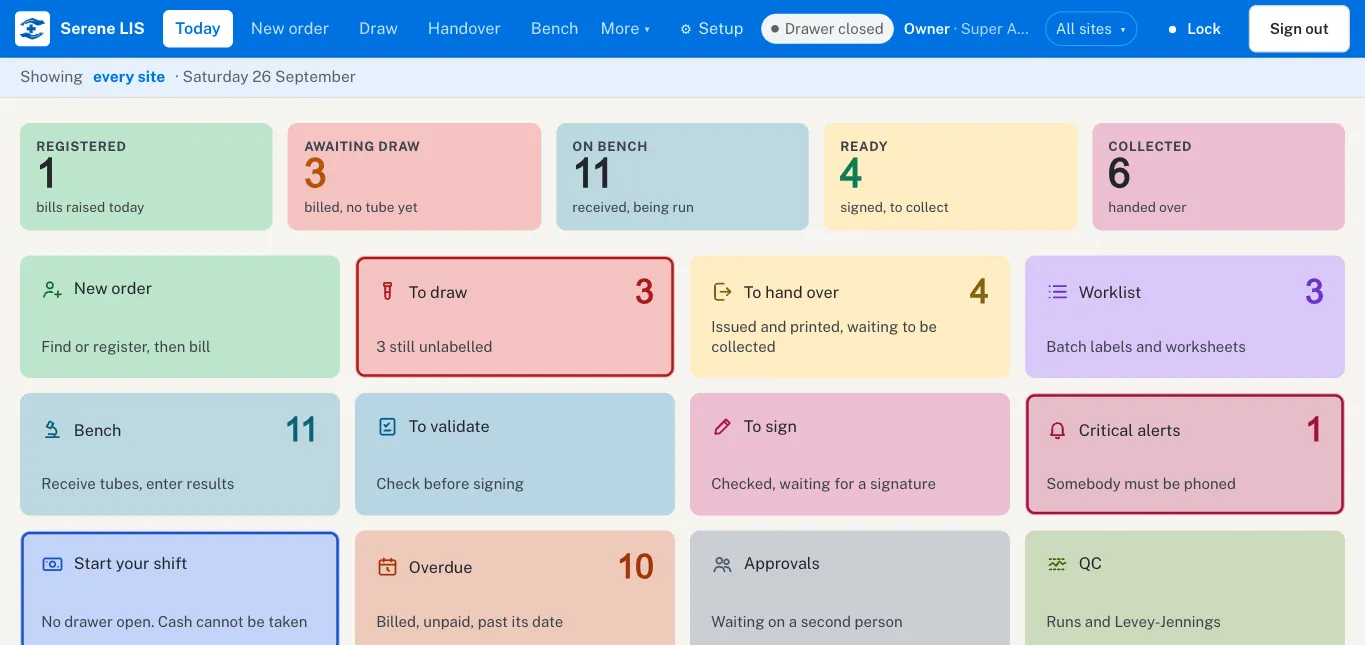
The day, in one screen
How many bills were raised, how many tubes are waiting to be drawn, what is on the bench, what is ready to collect. Underneath, the jobs somebody has to do: three tubes still unlabelled, one critical value that needs a telephone call, ten bills past their due date. Nobody has to go looking for the work.
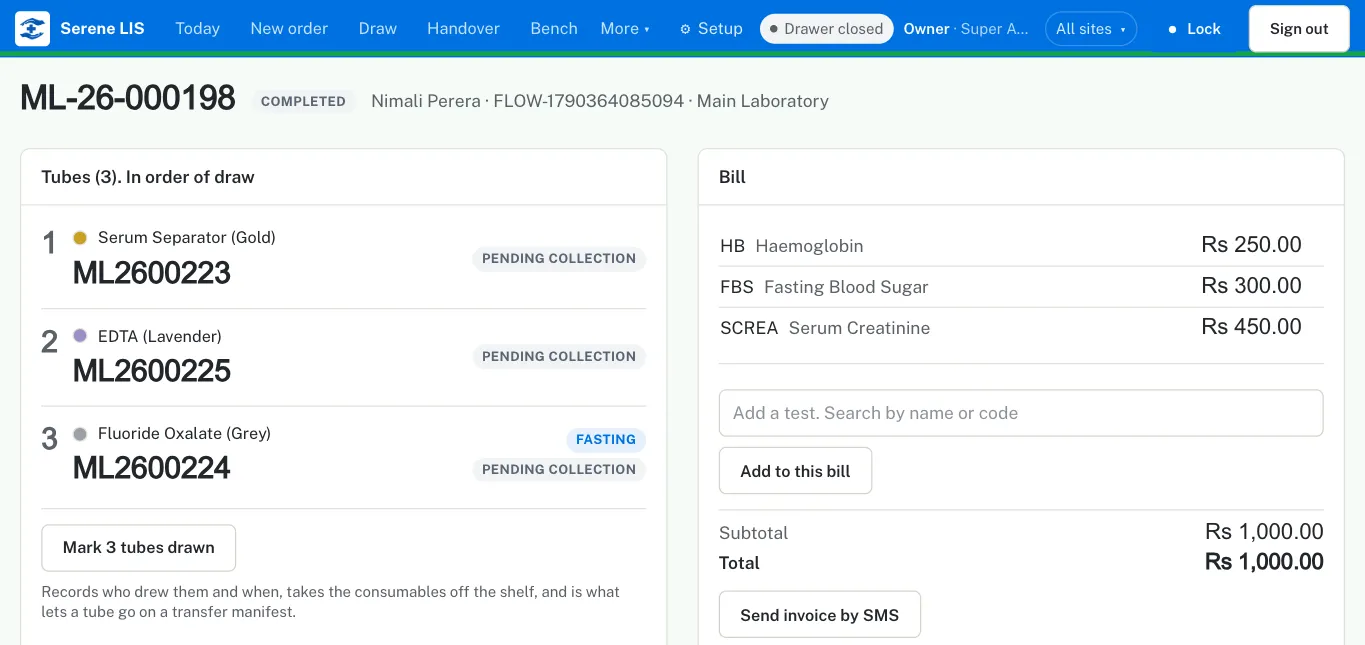
One bill, and the tubes it became
Ordering a test is not ordering a tube. The system works out which tubes are needed, merges the tests that share one, and puts them in the clinical order of draw, because EDTA carried into the next tube falsely raises potassium and lowers calcium. Each tube gets its own barcode. The bill goes out as an SMS link.
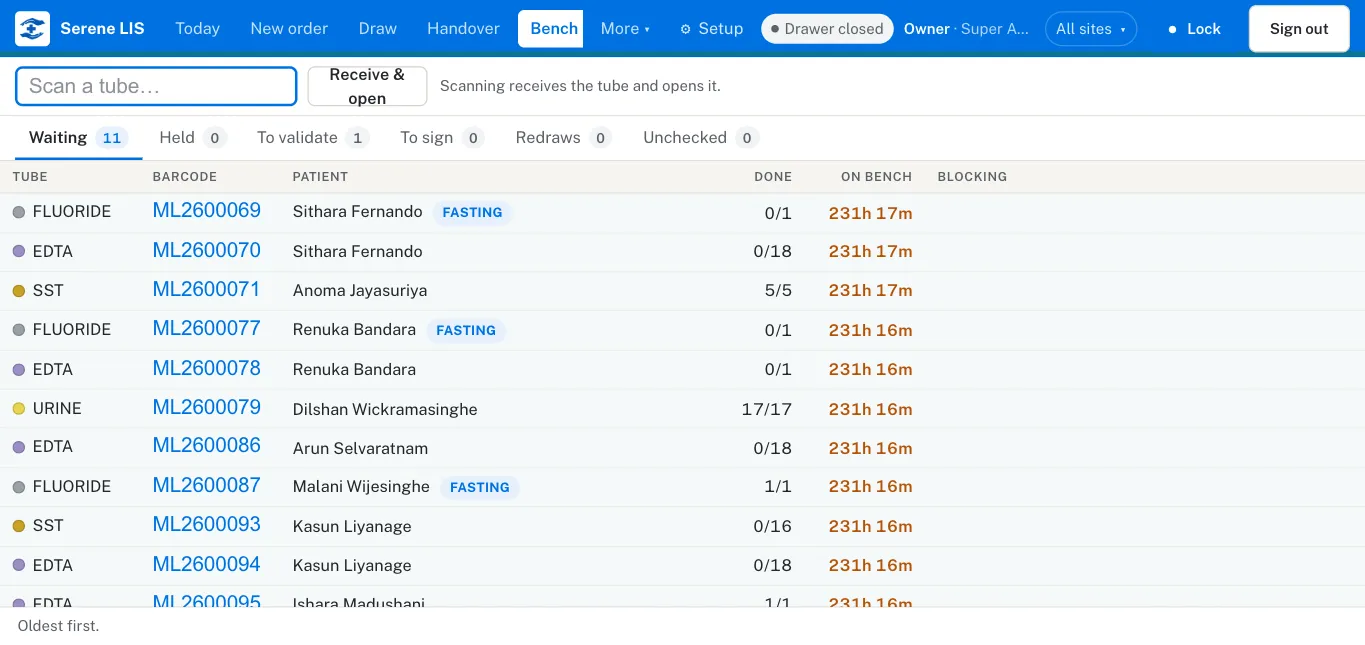
The bench
One table asked five questions: what is waiting, what is held, what needs validating, what needs signing, what needs redrawing. A scan receives the tube and opens it. The fasting tags are on the row because a fasting sugar and a post meal sugar are two different measurements two hours apart, and the bench has to be able to tell them apart.
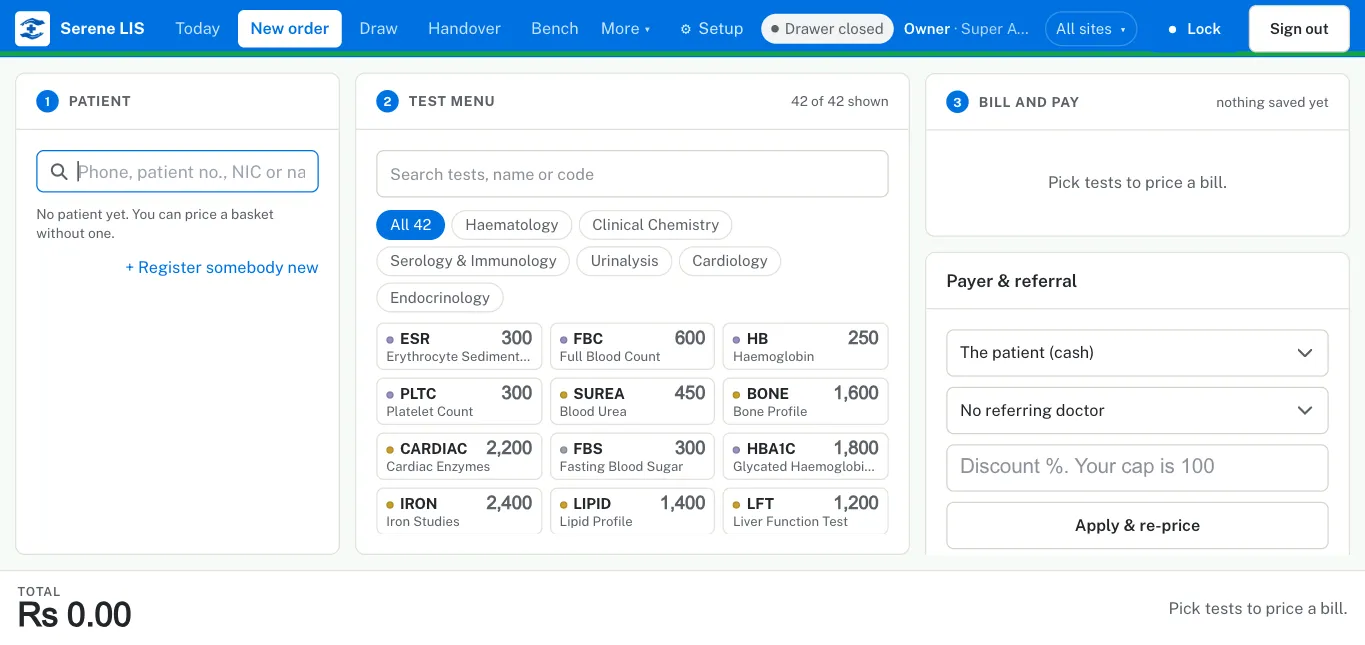
The counter
Find a patient by phone number, patient number, NIC or name, or register them in place with whatever was already typed. Price the basket as you build it, at this counter's prices rather than a list somebody has to remember. The price on the tile is the price on the bill.
Stock that matches the shelf
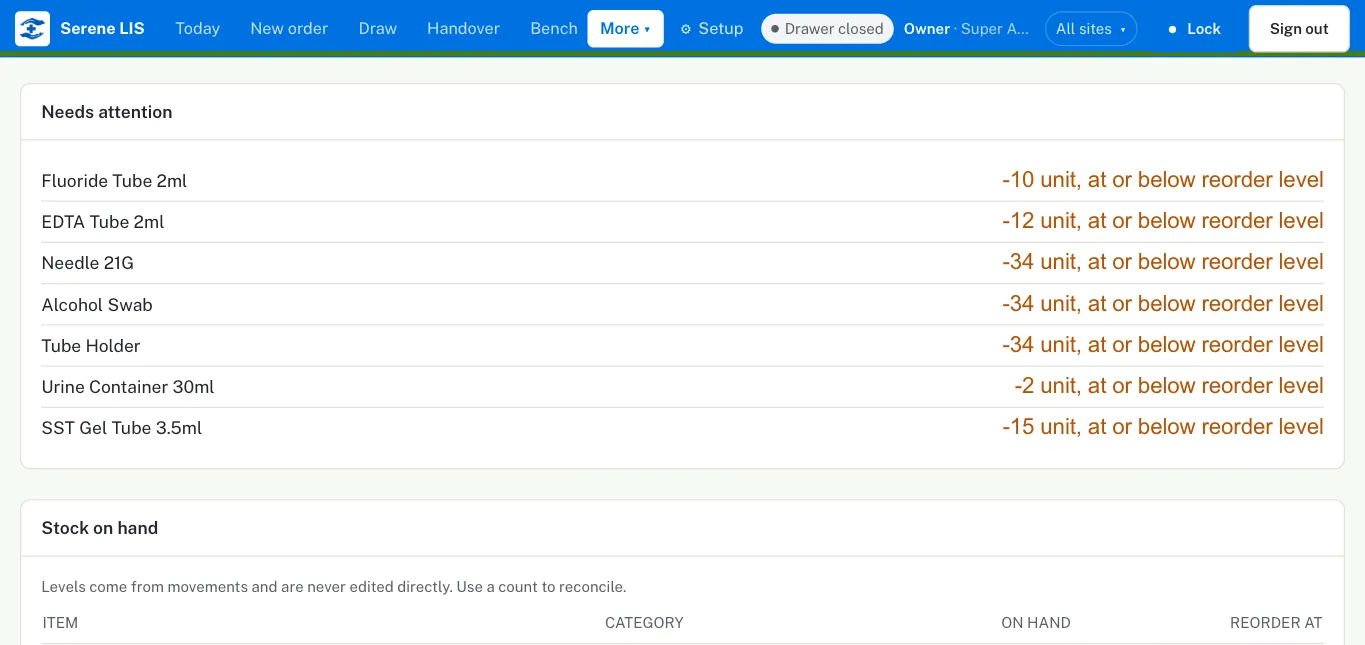
Levels are derived from movements and never typed over, so they cannot quietly drift from what is actually there. Tubes come off at the draw, reagent at the run, and every result records the reagent lot that produced it, which is the only thing that answers "which patients were affected" when a lot is recalled.
What it does
The parts that matter, briefly.
Analysers report into it directly
Over HL7, both ways: the machine asks what a tube is for and sends its results back as a message. Nobody retypes a number, which is the one error repeating a test cannot catch.
A disagreement is held for a person
When a repeat run differs from the first beyond that analyte's limit, the reported value is withdrawn and the result goes back to pending until a scientist chooses and says why.
Quality control blocks release
Westgard rules, evaluated per run. A rejected control stops patient results going out, and overriding it takes a written reason and a name.
Reports go out as a private link
SMS carrying no test name, opened with a date of birth, expiring, and revoked automatically if the result is ever amended.
Nothing clinical is deleted
An amendment keeps the original, versions the report, forces it to be signed again, and withdraws every link already sent.
Money, all the way through
Bills, discounts with approval thresholds, corporate credit, insurance claims, cashier sessions counted note by note, refunds that need a second person.
Stock, assets and expenses
Reagent lots, reorder alerts, physical counts posting their variance, analyser service dates, and what each site actually costs to run.
Every screen is permissioned
Nine roles, read from the database on every request rather than from the token, so revoking access takes effect immediately rather than at next sign-in.
What it is not
It is one system serving one laboratory today, and it is honest about the parts that are new. Some analyser mappings are still verified against real messages rather than shipped as fact, and the features that have never met a real machine say so in the documentation rather than in a brochure. If you are considering running your lab on it, ask us what is not finished and you will get a straight list.
Thinking of running your laboratory on it?
It comes with the partnership rather than as a licence you buy and are left with. Installed, configured for your menu and your prices, and your staff trained on it.